


Riser recliner chairs provide both comfort and support, particularly for individuals with mobility issues. An important aspect of these chairs is the back design, which plays a crucial role in their overall comfort and functionality. Riser Recliners benefit posture, pressure relief and overall relaxation. Different styles of back offer different levels of support and cushioning. Each ensuring that every user can find the right fit for their specific needs.
Let’s take a look at the various types of chair backs found in riser recliner chairs. Including their different features and functionalities so you can find the right chair for you.
Introduction to Chair Backs
The design of the backrest plays a crucial role in the comfort and support of any riser recliner chair. It has an impact on your posture, spinal alignment and the distribution of pressure across your back. And, since everyone has different needs and preferences, it’s important to find the right design for you.
Understanding the differences between each type of chair back helps you stay properly supported in all the right places, improving comfort and reducing strain on your back.
Common Types of Chair Backs in Riser Recliner Chairs
There are several different types of chair backs for recliner chairs, each with its individual benefits. Here’s everything you need to know.
Waterfall Back
Waterfall back chairs have multiple tiers of cushioning that gentle cascade down, resembling a waterfall. The cushions provide excellent lumbar support and help to distribute weight evenly across the upper, middle and lower back. Waterfall backs can help to alleviate discomfort and relieve pressure points.
The design typically moulds to the user’s back, making it a great choice for those looking for extra comfort and targeted support. As well as being a stylish design that’ll look great in any home. Try the Aysgarth Riser Recliner, with gloriously soft yet supportive cushioning.
Button Back
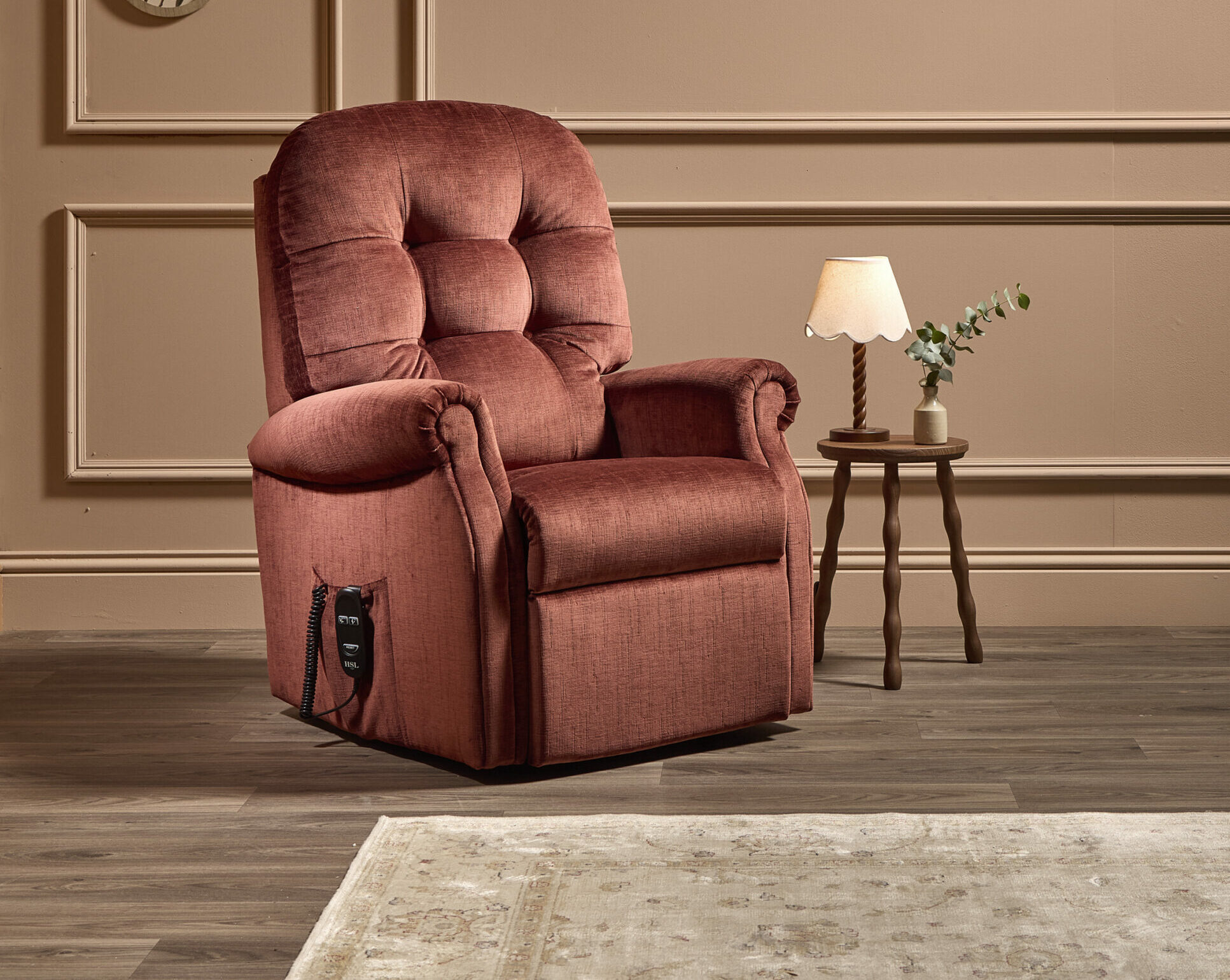
Button back chairs offer the perfect blend of classic style and comfort with tufted buttons that create a structured and supportive surface across the backrest.
This style of chair is often chosen for its aesthetic appeal. It also provides firm support, making it the ideal choice for those who prefer a more upright sitting position with support to maintain good posture. Try the Bicester Riser Recliner with an attractive button design that aligns to the natural curve of your back.
Wing Back
Wing back chairs have a high back with side panels or ‘wings’ that extend from the backrest down to the armrests, providing additional support. The high back supports your head, neck, shoulders and back to reduce strain and help maintain excellent posture.
This design is a great choice for those who prefer a more secure seating experience. The wings help you to feel enclosed and comfortable while seated. Their timeless design will fit in with any home’s decor, and will stay looking stylish for many years to come.
With its deep wings and classic high seat and back, the Glenmore Fireside Chair has been thoughtfully designed to support how you feel from top to toe.
Orthopaedic back
Just because a chair looks stylish doesn’t mean it can’t also provide support for back pain – and that’s where our orthopaedic back riser recliners come in! Our orthopaedic back chairs are specially designed to support your neck, head and back. Helping to alleviate joint pain, backache, arthritis pain and headaches. That means you’ll always have the support you need to sit comfortably.
With its plush high back cushion and generously padded arms, the Ripley Power Recliner is a luxuriously comfortable and supportive recliner.
Our orthopaedic chairs offer neck, back and hip support, so you can get the support you need in all the right places. Take a look at our guide to choosing the best chair for back pain to find out more about selecting the right orthopaedic chair for your needs.
Design Considerations for Chair Backs
It’s crucial that your chair back supports you, whether you have a condition like arthritis or are simply looking for a comfortable chair that’ll last for years to come. Here are some of the key things to look out for.
Ergonomic Support
An ergonomic design is one of the most important aspects of riser recliner chair design. The design ensures that the backrest provides proper spinal alignment and reduces pressure on key areas of the spine.
The design should support the natural curve of the spine, with features such as lumbar support, contoured cushioning and adjustable components like headrests, back angle and cushion depth. This helps to reduce strain and promote healthy posture.
Getting a chair that fits properly has a number of other physiological benefits like reducing heart rate, increasing oxygen flow and lowering blood pressure. Read more in a study by Dr Andrea Utley at the University of Leeds.
Material and Upholstery
The choice of material and upholstery is also an important factor when choosing your recliner, as it can affect both the comfort and longevity of your chair. There’s a wide range of fabrics and leathers to choose from here at HSL. From plush fabrics to classic leather. Each offering different levels of support and aesthetic appeal.
Fabrics offer a soft and cosy feel, ideal for those looking for a comfortable, cushioned experience. Leather, on the other hand, is sleek and durable making it easy to clean and maintain. Find out more about how to choose between fabric and leather upholstery – ultimately, it all comes down to personal preference.
Impact of Chair Back Design on User Experience
A well-designed chair can have a big impact on your comfort levels. Making it easier to get in and out of your chair is important – particularly for people with additional mobility needs. Here are some of the key factors to consider.
Comfort and Support
The design of the chair’s back directly impacts the comfort levels and amount of support for users. A well-structured backrest can alleviate discomfort by reducing pressure on the spine and other pressure points, while helping to improve posture and offering proper lumbar support. All our furniture is approved by Independent Occupational Therapist Julie Jennings. She’s instrumental in training our Comfort Specialists to understand good posture, the correct seating position and supportive transfer in and out of a chair. Meaning you’re guaranteed to have feel-good furniture that properly fits your body.
Mobility and Accessibility
Riser recliner chairs are often used by people with mobility challenges. The design of the chair back can make it easier to get in and out of the chair. Additionally, features like firm lumbar support and ergonomic back support can facilitate easier transitions and make the chair more accessible.
Choosing the right type of chair back in a riser recliner chair is essential for ensuring comfort, support, and functionality. By understanding the different designs available, you’ll be better equipped to choose the right chair. Find a chair that meets your specific needs and preferences.
And if you still need a helping hand, we offer a free Chair Fitting service to ensure that each point of the body is supported to maximise comfort and overall wellbeing. We also offer a Home Demonstration service, during which we’ll bring our feel-good furniture to you. So, you can experience the HSL showroom from the comfort of your own home.