

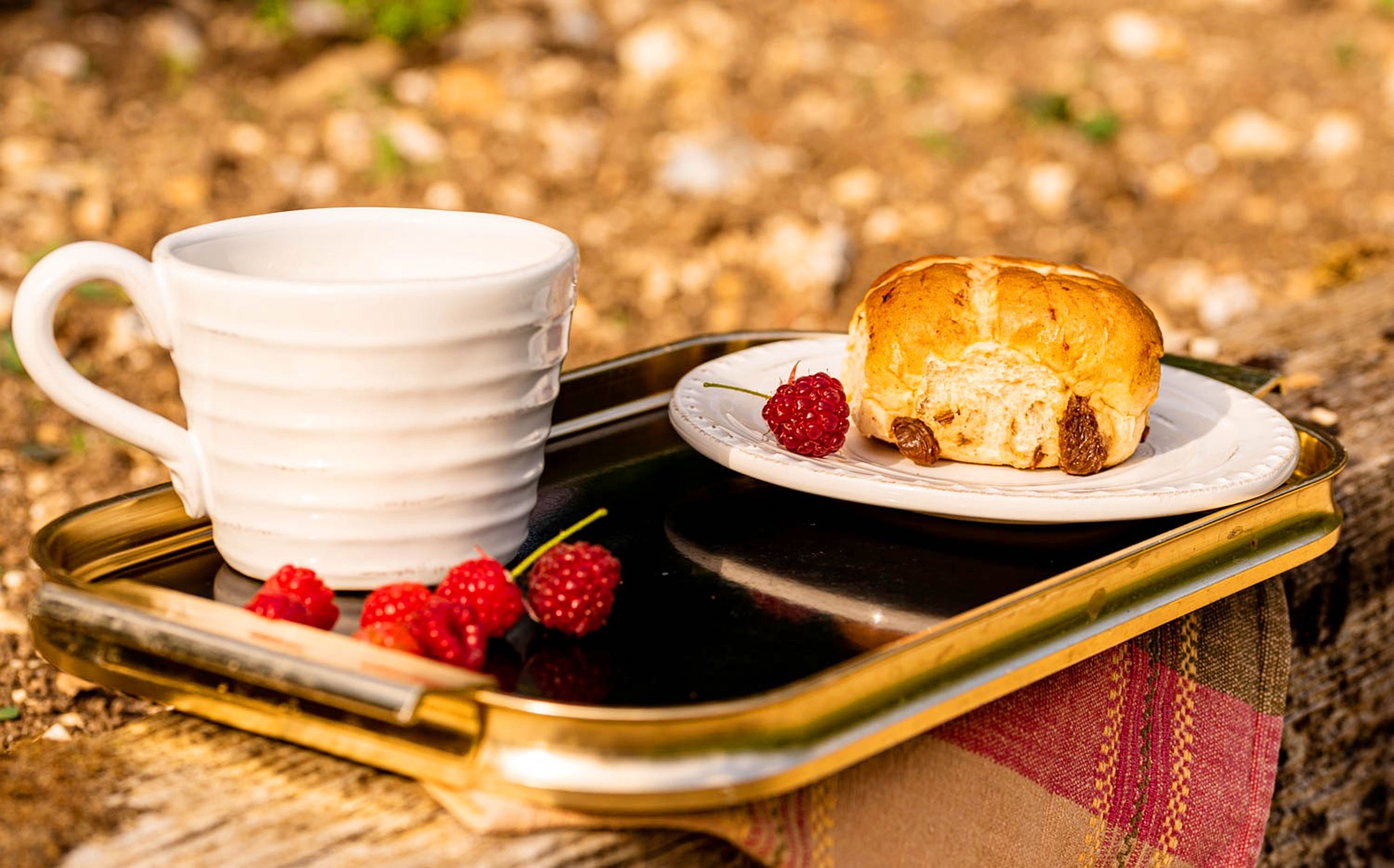
When you enter any supermarket this time of year, you’ll notice the Easter eggs with images of rabbits and chicks, and hot cross buns are back in the bakery section. They’re a yearly treat, steeped in symbolism of the church and enjoyed by generations of people. But where does the hot cross bun come from?
The History of the Hot Cross Bun
We’re all familiar with the nursery rhyme,
“Hot-cross-buns; one-a-penny, two-a-penny buns; one- a-penny, two-a-penny, hot-cross-buns!”
Did you know this nursery rhyme was first used by 19th-Century Street sellers? From dawn till dusk, the Georgian streets of London were filled with people carrying wicker baskets to sell fluffy buns flavoured with mixed spices and marked with a cross.
According to the Oxford English Dictionary, the first definitive print referencing the ‘hot cross bun’ comes from Poor Robin’s Almanac, 1733. Before this, the origins of hot cross buns are uncertain. Many cultures have made ordinary bread into something special. With fruits and sweeteners added to mark important festivals.
Many historians believe that hot cross buns pre-date Christianity when currant bread was baked in honour of the Saxon goddess of spring, Eostre. This was usually eaten hot and possibly dipped in honey to celebrate the hopefulness and abundance that comes with the changing of seasons.
Another theory is that hot cross buns originate from medieval monks. The monks would stamp their Easter bread with a cross to commemorate the religious importance of the season. You can still find Alban Buns at St. Alban’s Cathedral.
Wherever they came from, hot cross buns are a timeless classic to celebrate Spring.
Hot Cross Bun Recipe
Have a go at making your own this Easter. Follow the recipe below and enjoy the fruity, sweet bread.
This recipe makes 15 buns.
Ingredients
Buns
- 300ml full fat milk, plus 2 tbsp more
- 50g butter
- 500g strong bread flour
- 1 tsp salt
- 75g caster sugar
- 1 tbsp sunflower oil
- 7g sachet fast-action or easy-blend yeast
- 1 egg (beaten)
- 75g sultanas
- 50g mixed peel
- Zest 1 orange
- 1 apple (peeled, cored and finely chopped)
- 1 tsp ground cinnamon
- 1 tsp mixed spice
The cross
- 75g plain flour (plus extra for dusting)
Glaze
- 3 tbsp apricot jam
Method
Step 1
Pour 300ml of full-fat milk into a pan and bring to a boil. Remove from the heat and add 50g of butter, leaving it to cool until it reaches room temperature.
In a large bowl, pour in 500g of strong bread flour, 1 tsp of salt, 75g of caster sugar and 7g of fast-action yeast. Make a well in the centre of the dry mixture and pour in the milk and butter. Add the beaten egg and mix everything together using a wooden spoon. Once combined, use your hands to bring everything together until you have a sticky ball of dough.
Step 2
Lightly flour your surface and tip your dough on top. Knead the dough by holding it with one hand and stretching it with the heel of the other, then fold the dough back on itself. Repeat for around 5 minutes or until the dough is smooth and elastic.
Place the dough in a lightly oiled bowl and cover the top with oiled cling film. Leave the dough in a warm area for around 1 hour or until it has doubled in size and a finger pressed into it leaves a dent.
Step 3
Once risen, add in 75g of sultanas, 50g of mixed peel, the zest of 1 orange, 1 finely chopped apple, 1 tsp of ground cinnamon and 1 tsp of mixed spice. Knead everything into the dough, making sure the ingredients are well distributed. Cover the dough with oiled cling film in the bowl and leave it to rise for another hour, or until double in size again.
Step 4
Once the dough has risen for its second time, flour the surface and tip the dough out. Divide the dough into 15 equal-sized pieces and roll each piece into a smooth ball. Line 1 or 2 baking trays with parchment paper and line the buns up, leaving enough space for the dough to expand. Cover with more oiled cling film, or a clean towel and let the dough rise for another hour.
Step 5
Whilst your buns rise, heat your oven to 200C/ 180C fan/ gas mark 6. Mix 75g of plain flour with around 5 tbsp of water to make the paste for the cross. Add the water 1 tbsp at a time so your flour mixture becomes a paste and not runny. Spoon into a piping bag, cut in a small nozzle and pipe a line along each row of the buns. Repeat until you have your crosses.
Bake the dough for around 18-20 minutes on the middle shelf of your oven, or until golden brown.
Step 6
Melt 3 tbsp of apricot jam to melt, this can be done in the microwave or on the stove. Sieve the jam to remove any chunks. Whilst the jam is still warm, use a brush and spread it over the top of the warm buns and leave everything to cool.
FAQs
What kind of yeast should I use?
Use fast-action or easy-blend yeast. These can be added straight in with the dry ingredients, whereas dried yeast needs to be dissolved in liquid first.
What’s the best method to pipe on the cross?
Pipe the crosses over the buns slowly. The paste should ‘hug’ the curves of the buns.
What’s the easiest way to get the buns the same size?
Weigh each lump of dough before shaping. This way they are sure to bake the same size and cook evenly.
Enjoy this delicious recipe fresh from the oven or toasted with generous amounts of butter, clotted cream and jams. You could also go for a sweet twist with chocolate spread or a savoury sensation with cheese or even bacon.
For more delicious recipes, check out our Feel Good Hub. Why not check out these related articles?
- Spring into Making Easy Easter Crafts
- ‘Proper’ Yorkshire Puddings for your Sunday Roast
- Mini Egg Cookie Recipe for that extra Easter treat